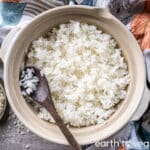
4-Step Stovetop Rice
Servings: 3 cups cooked rice
Calories: 243kcal
Cost: $0.17 per cup
How to perfectly cook any type of white rice on the stove in 4 steps using a pot, Dutch oven, or donabe. Small batch perfect for 1-2 people. No more soggy rice!
Print Recipe
Equipment
- Dutch oven, clay pot, or stock pot with a lid (at least 1-quart capacity for every 1 cup of rice)
- Rice paddle or wooden spoon
Ingredients
- 1 cup white rice
- 1 cup water (use 1 ½ cups (360 g) if using basmati rice; see Note 1)
Instructions
- Rinse: Wash and drain the rice (see Note 2).
- Boil: Add the washed rice to a pot and set it on the stove. Pour in 1 cup of water (1 ½ cups if using basmati rice) and cover with a lid. Turn the stove on to medium heat and wait for the water to come to a simmer, around 10–13 minutes.
- Simmer: Once the rice begins to boil, uncover the pot and give it a quick stir to make sure no rice grains are stuck to the bottom of the pot. Put the lid back on and turn the heat down to the lowest it can go on your stove. Simmer for 6 to 14 minutes, depending on the type of rice:
- Basmati Rice: 12 minutes
- Calrose Rice: 14 minutes
- Jasmine Rice: 10 minutes
- Koshihikari Rice: 12 minutes
- Nishiki Rice: 12 minutes
- Sekka Rice: 12 minutes
- Sona Masoori Rice: 12 minutes
- Steam: Once the minutes are up, remove the rice from the heat. Keep covered for another 10 minutes (15 minutes if using jasmine rice). Then remove the lid and gently fluff the rice with a rice paddle or wooden spoon.
Notes
- Water: It’s important to measure out your rice and water carefully to avoid over/undercooked rice. You must use the right ratio of rice and water with the right cooking technique to get quality stovetop rice.
- Is rinsing optional? Look, I’ve made rice without rinsing before, and it turned out fine, but it’s always just a little more clumpy, so I’d recommend rinsing if you can. The rice water will never run perfectly clear, no mater how many times you wash the rice, but it’s fine as long as it’s no longer totally opaque. I usually rinse my rice at least three times.
- No need to use a colander to drain your rice. Just pour out the water carefully without dumping any of your rice along with it.
- Once rinsed and drained, 1 cup of uncooked rice will retain 3–4 tbsp (45–60g) of water. This is fine; the recipe accounts for the residual water.
- Soaking: You may notice that I don't call for soaking the rice in this recipe. Unless you're cooking sticky rice, the soaking does not make a big difference. I'm often in a hurry when cooking dinner so I usually don't have time to soak beforehand. HOWEVER, if you would like to soak your rice, do it about 30 minutes before cooking. Also, add an extra 2 tbsp of water when cooking.
Nutrition
Calories: 243kcal | Carbohydrates: 53g | Protein: 5g | Fat: 0.4g | Saturated Fat: 0.1g | Polyunsaturated Fat: 0.1g | Monounsaturated Fat: 0.1g | Sodium: 7mg | Potassium: 77mg | Fiber: 1g | Sugar: 0.1g | Calcium: 21mg | Iron: 1mg