
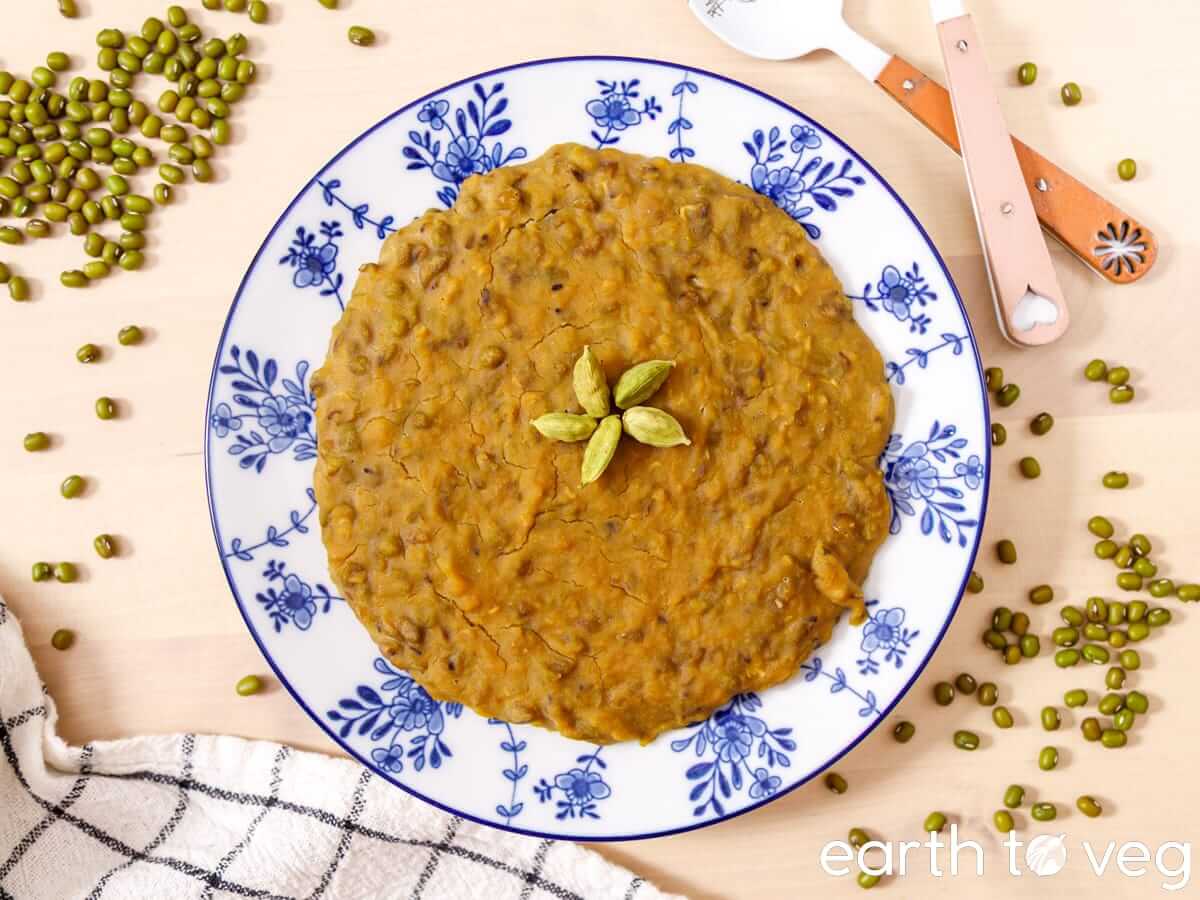
Godshe or godshem is a Goan festival dessert made by simmering mung beans with coconut milk and jaggery (brown sugar works in a pinch), and it can be enjoyed either hot or cold. Naturally vegan, gluten-free, and made with three pantry-friendly ingredients.
History & Origins
In Konkani, god means sweet, and godshe (गोडशे), sometimes spelled godshem, is the catch-all for a family of porridge-like sweets from Goa. The mung bean version, mugache godshe, is the most common and the most beloved. You’ll find it on the table at festivals and family gatherings throughout the year.
What makes the Goan version distinct from the many other South Indian mung bean puddings (such as paruppu payasam) is the use of whole mung beans and Goan palm jaggery.
Most Indian jaggery is made from sugarcane, but Goan jaggery is rendered from the sap of the coconut palm, so it tastes uniquely caramelly and coconutty. Goa is on the southwest coast of India and coconut palms are an iconic symbol of the region. Goan cuisine is famous for its heavy use of coconuts, even moreso than other places in India!
Another quirk of the Goan godshe is the use of whole mung beans. Most other payasams (puddings) use split mung beans which have the skin removed (moong dal). But Goan godshe typically uses whole mung beans with the skin on.
A note on transliteration
Konkani is officially written in Devanagari script (where godshem is spelled गोडशे), but in Goa you’ll often see it written in Latin script (Romi Konkani) on restaurant menus and in cookbooks. Godshe, godshem, and godxem are all spellings of the same dessert.
Reasons to Try Goan Godshe
- Real simple ingredients: This dessert uses just three ingredients, all fairly unprocessed.
- Mostly hands-off: The mung beans simmer for an hour and a half with no babysitting. You stir for about 15 minutes at the end and that’s it!
- Enjoy hot or cold: This is one of those desserts that can be enjoyed both warm or cold, depending on the season and how you’re feeling! Reminds me of that old nursery rhyme… Pease porridge hot, pease porridge cold…
- Naturally vegan & gluten-free: Goan godshe is traditionally plant-based with coconut taking the place of the dairy that is so common in Indian desserts.
What You’ll Need
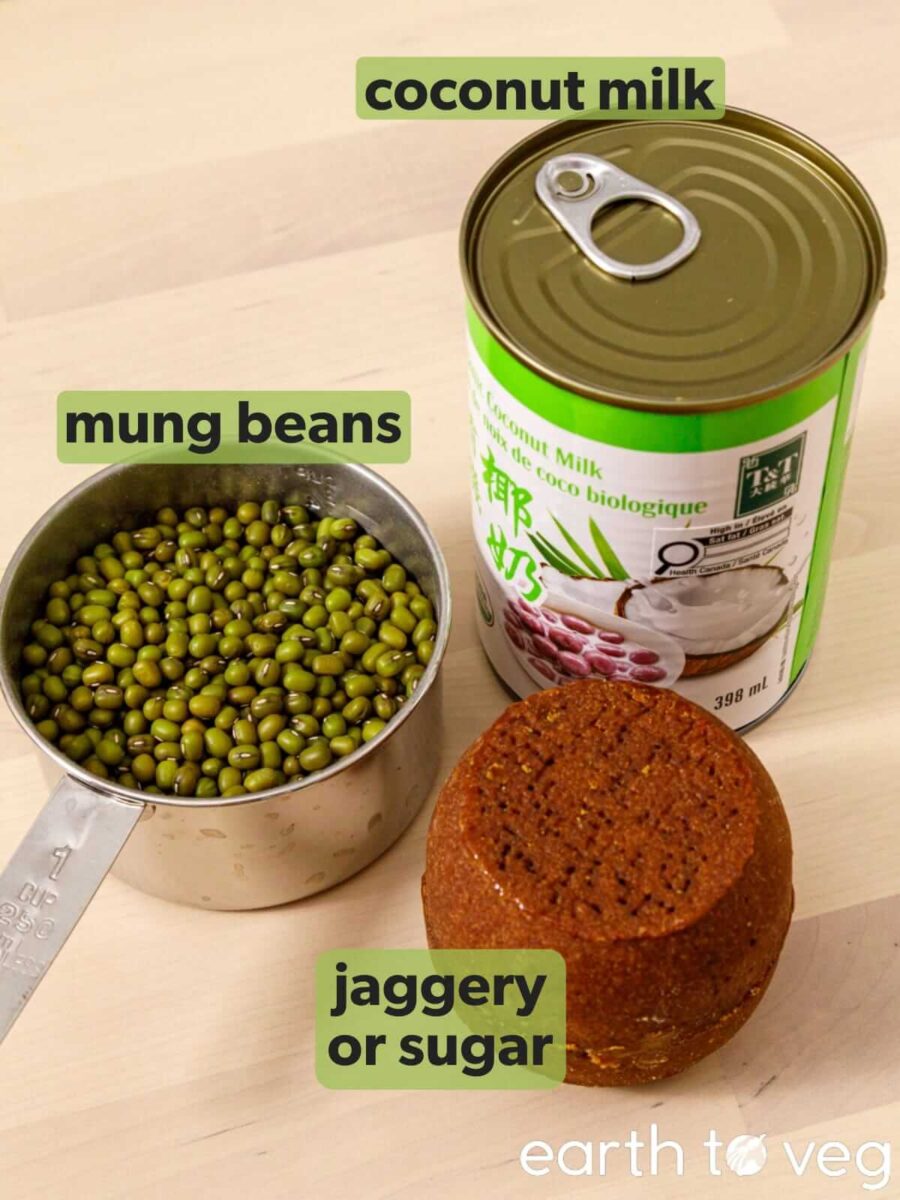
Mung beans: Make sure to use the whole green mung beans with the skin still on, not the yellow split moong dal. No need to soak them ahead of time. Mung beans are so small that they cook quickly, only about an hour and they are perfectly cooked from dry.
Coconut milk: The canned kind, not the carton kind meant for drinking. Use the full-fat thick stuff for the best results. Light coconut milk will give you a thinner, less luxurious pudding.
Goan jaggery: Goan jaggery comes in little pyramid shapes—one pyramid is roughly equivalent to ½ cup of granulated sugar. If you can find it at a South Asian grocer or online, get it. If you can’t, light brown sugar is the next best thing. I’m actually using piloncillo (a Colombian cane sugar) in these pictures because I recently bought a big pack and wanted to use it up 🙃
Hint: If you can’t find Goan jaggery specifically, look for coconut palm jaggery or date palm jaggery (also called nolen gur in Bengali) — both are closer to the Goan original than sugarcane jaggery is. Brown sugar will work in a real pinch, but you’ll lose the coconut undertone that makes this godshe taste like a godshe.
Cardamom: Optional, but half a teaspoon of ground cardamom pairs wonderfully with the coconut in this pudding.
For a full list of ingredients and quantities, refer to the recipe card at the bottom of this post.
Step-by-Step Process
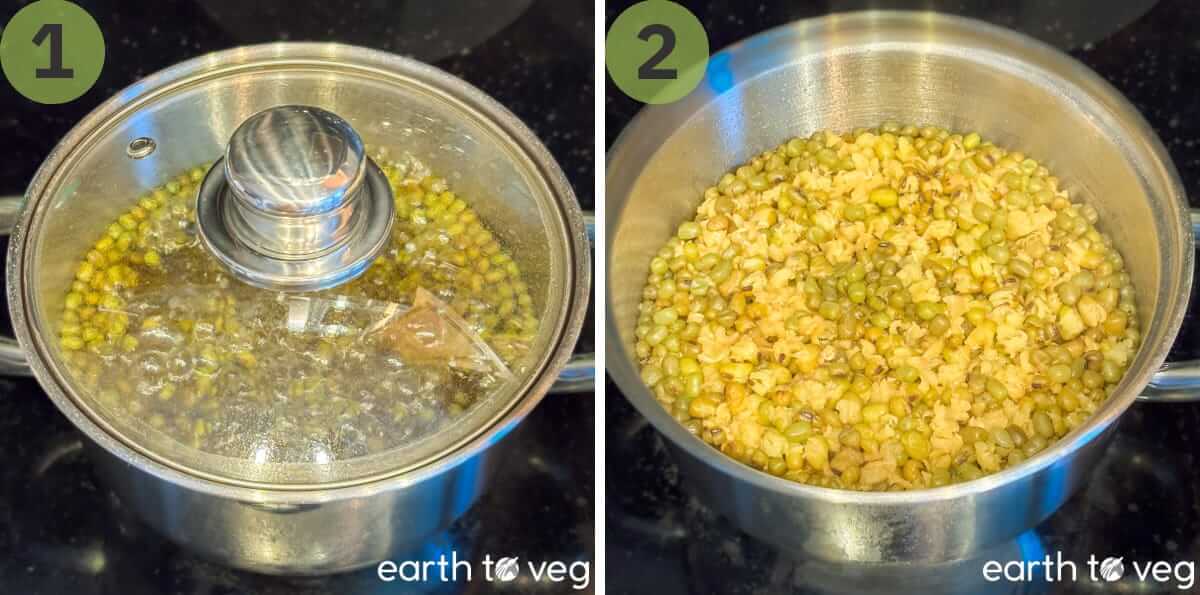
Step 1: Combine the mung beans and water in a heavy-bottomed pot and bring to a boil.
Step 2: Drop the heat to low. Simmer, covered, until the beans are soft and most of the water has been absorbed.
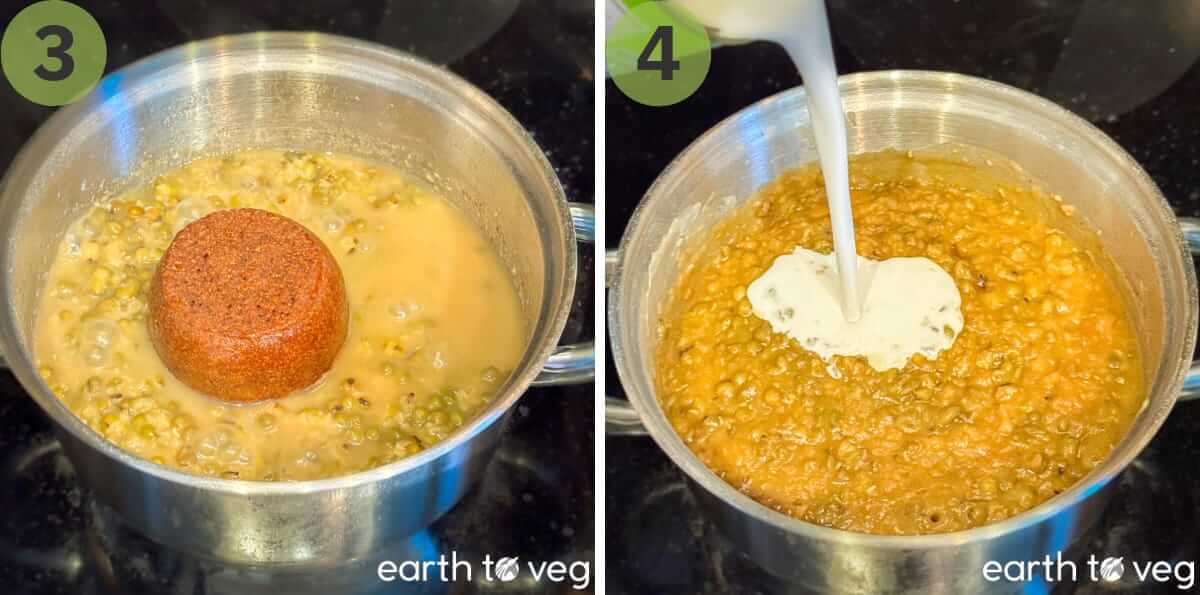
Step 3: Stir in jaggery and cardamom (if using). Turn the heat back up to medium.
Step 4: Pour in the coconut milk and stir to combine.
Don’t stop stirring! The coconut sugars have a tendency to stick and burn if you’re not careful. Once you add the jaggery and coconut milk, keep stirring frequently to prevent the bottom of the pot from burning.
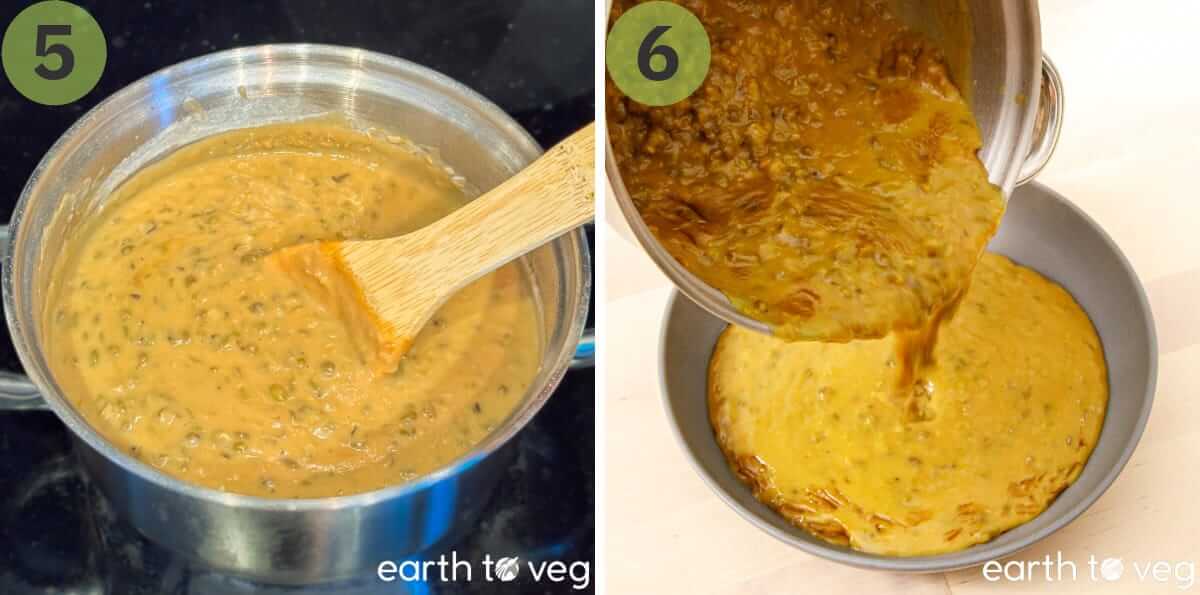
Step 5: Keep cooking until the pudding has thickened slightly, stirring all the while.
Step 6: Portion the godshe onto small plates or shallow bowls. You can serve warm right away or serve it chilled.
Make Ahead & Storage Tips
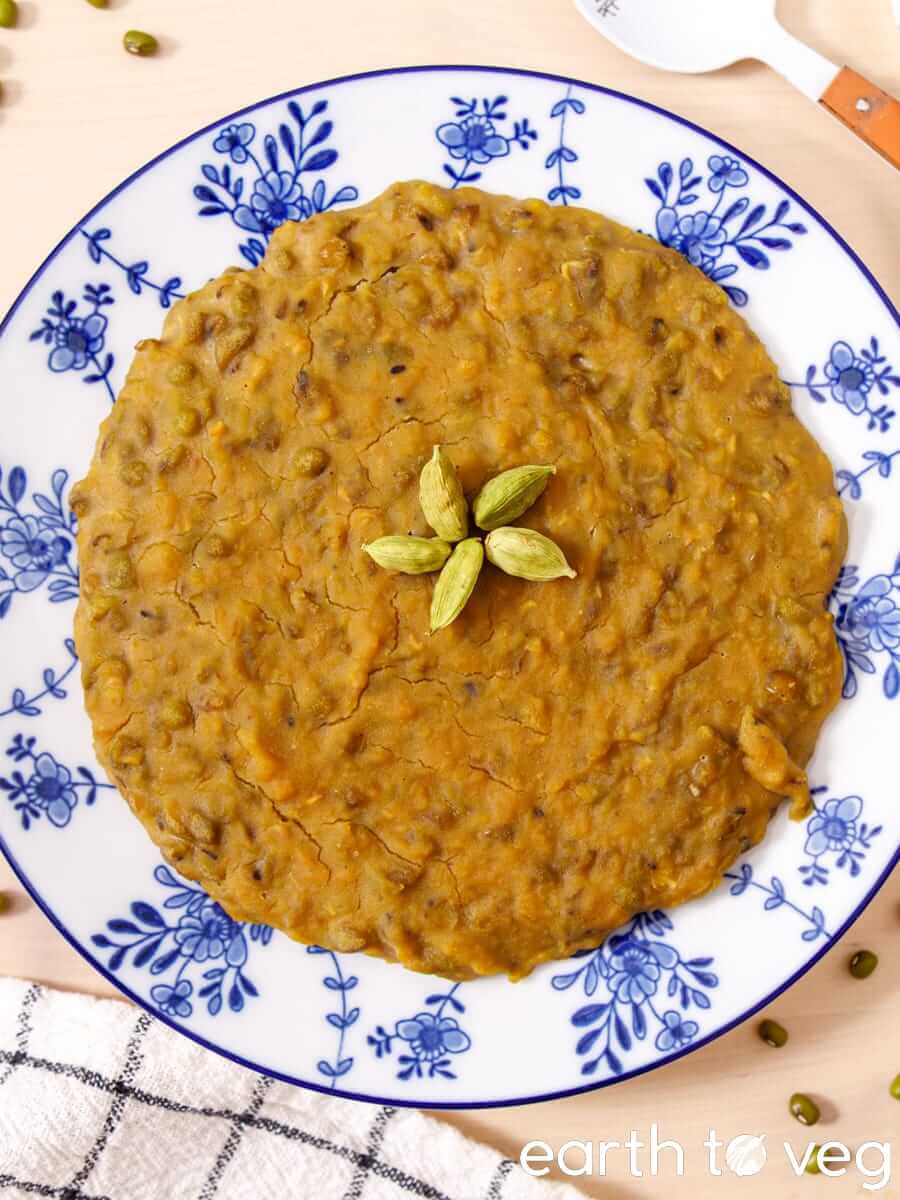
Godshe is good for up to 4 days refrigerated in an airtight container. It will thicken as it cools, which is normal. Some versions of godshem are even so thick they can be sliced like a cake!
I personally prefer cold, chilled godshe over the warm version, but if you prefer it warm, you can easily heat it up in the microwave or on the stove with a splash of water. It’s a great dish for meal prepping and making ahead of time.
I haven’t tried freezing this recipe yet.
Recipe FAQs
You can, but you’ll get a bit of a different dessert. The version of this pudding made with split dal is known as Parippu Pradhaman or Parippu Payasam. Dal cooks much faster than whole mung beans, so just 40 minutes of simmering would be enough.
Thick. More pudding than porridge. Some versions of chilled godshe are so thick they can even be sliced like a cake. But of course, in your own kitchen you’re the boss so if you’d like a more soupy consistency, no one’s gonna tell you no.
Actually yes, using fresh grated coconut is even more traditional than using coconut milk, albeit less convenient and a little messier. If you have fresh coconut, use a box grater or food processor to shred it into very fine, tiny bits, then you can either dump the whole thing into the godshe (pulp and all), or strain out the fibrous coconut flesh and use just the milk.
Recipe Card
Did you make this recipe? Please consider leaving a rating below to let me know how you liked it. You can also take a picture and tag me on Instagram @earthtoveg, I will shout you out in my Stories!
Godshe (Goan Mung Bean Pudding)
Ingredients
Switch between volume vs weight measurements:
- 1 cup dry mung beans no need to soak
- 2 ¼ cups water see Note 1
- 1 cup canned coconut milk
- 1 pyramid Goan jaggery or 1/2 cup brown sugar see Note 2
- ½ tsp ground cardamom *optional
Instructions
- Boil 1 cup dry mung beans in 2 1/4 cups water for 1 hour on low heat.
- Dissolve 1 pyramid Goan jaggery or 1/2 cup brown sugar and 1/2 tsp ground cardamom (optional) into the mung bean mixture.
- Stir in 1 cup canned coconut milk. Bring the heat back up to medium and continue to cook for another 10 minutes. Stir frequently to prevent the mixture from sticking to the bottom of the pot.
- Portion the godshe onto small plates or shallow bowls. Serve warm or chilled.
Notes
- Water: You should not need to add any more water than this, or else the end result will be too runny. By the end of an hour, it should look like the mung beans have absorbed almost all of the liquid with not much water remaining.
- Goan jaggery is made with coconut palm sap and has an amazing intense coconut flavour. It usually comes in little pyramids each of which equate to roughly 1/2 cup of granulated sugar. Start by adding the amount specified in the recipe, and taste as you go, adding more if you prefer it to be sweeter.