
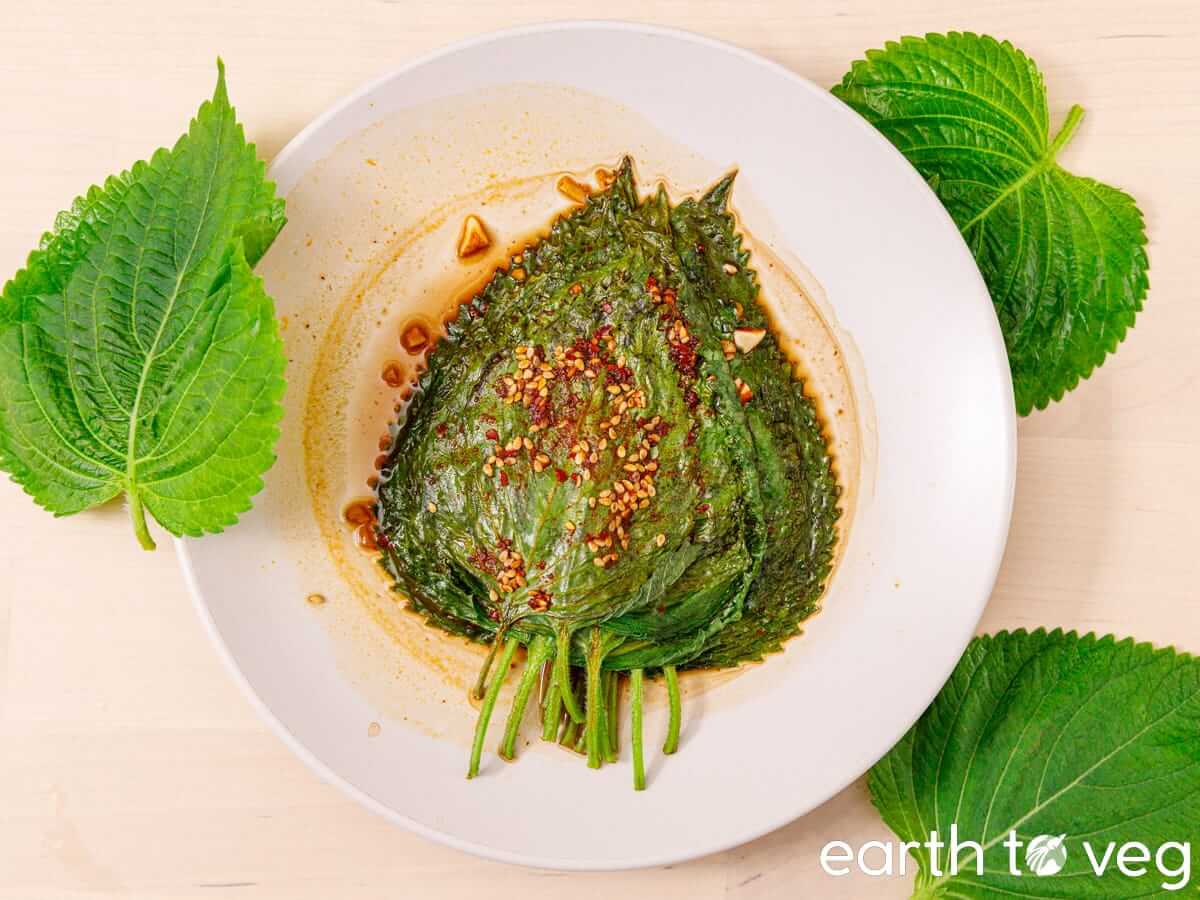
Kkaennip Jjim (aka Steamed Perilla Leaves) is a traditional Korean side dish (banchan) made by layering perilla leaves with an umami-rich marinade of garlic, soy sauce, and gochugaru. You might’ve seen perilla leaves at your local Korean grocery store, so if you’ve been looking for an easy way to use them, here’s your chance!
What is Kkaennip Jjim?
Kkaennip Jjim (깻잎찜) means steamed perilla leaves and they are marinated with a savoury, spicy sauce of gochugaru, soy sauce, garlic, and more.
This is a really popular Korean banchan recipe. If you’ve ever been to a Korean restaurant, they’ve likely served you banchan (free small little side dishes) before the start of the meal. This dish makes for a perfect side to a home-cooked Korean dinner.
You can eat perilla leaves raw, but they taste pretty strong and are a bit fibrous, so I prefer kkaennip jjim. Lightly steaming the leaves will make them more tender and their flavour becomes milder.
What You’ll Need

A few important notes on some of the ingredients used in this Kkaennip Jjim recipe:
Perilla Leaves (kkaennip | 깻잎) are a summertime staple in Korea. Sometimes they’re also sold as sesame leaves, although that’s a misnomer. Perilla leaves taste a bit like mint, basil, and licorice all in the same bite. These herby leaves are in the same family as shiso (you know, the leaf that your sushi comes served on in fancier Japanese restaurants). In my opinion the flavour is not as strong as shiso, which makes perilla more versatile.
The other ingredients are the standard seasonings that you will find in many Korean recipes: soy sauce, garlic, sesame oil, gochugaru.
For a full list of ingredients and quantities, refer to the recipe card at the bottom of this post.
Step-by-Step Process

Step 1: Rinse perilla leaves and pat dry.
Step 2: In a small bowl, mix together the sauce ingredients.

Step 3: Pour a cup of water into a wok or steamer or pot.
Step 4: Set a steamer rack on top. Cover and bring to a boil.

Step 5: Lay one perilla leaf on a plate, brush a small amount of sauce on top, then cover it with another leaf and brush on sauce. Continue to alternate leaf and sauce until you have used it all up.
Step 6: Put the plate onto the steamer. (I recommend using these plate grippers to be safe.) Cover and lower heat to medium. Steam for 3 minutes. Carefully remove the plate, let cool slightly, and serve.
What to Serve with Korean Perilla Leaves
Recipe FAQs
Kkaennip (known in English as perilla leaves) tastes a bit like mint, basil, and licorice all in the same bite. These herby leaves are in the same family as shiso (you know, the leaf that your sushi comes served on in fancier Japanese restaurants). In my opinion the flavour is not as strong as shiso, which makes perilla more versatile.
Perilla leaves are frequently mislabelled as sesame leaves in the grocery store, but they are not the same plant at all. Perilla leaves are more closely related to mint than sesame.
Shiso has a stronger flavour than kkaennip. Because of their pungency, shiso leaves are better used as a garnish than a main ingredient. Kkaennip, on the other hand, have a milder taste and therefore can be used in dishes like kkaennip jjim (steamed perilla leaves) or kkaennip kimchi. Shiso leaves also have spikier edges than kkaennip leaves.
More Side Dishes
Recipe Card
Did you make this recipe? Please consider leaving a rating below to let me know how you liked it. You can also take a picture and tag me on Instagram @earthtoveg, I will shout you out in my Stories!

Kkaennip Jjim (Korean Perilla Leaves Recipe)
Equipment
- Wok or skillet with high sides
- Steamer rack
- Heat-safe plate (large enough to hold the perilla leaves, small enough to fit in the wok)
Ingredients
Switch between volume vs weight measurements:
- 20 perilla leaves
- 1 clove garlic, minced
- 2 tsp soy sauce see Note 1
- 1 tsp gochugaru
- 1 tsp sesame oil
- 1 tsp toasted sesame seeds
Instructions
- Rinse 20 perilla leaves and pat dry.
- In a small bowl, mix together 1 clove garlic, minced, 2 tsp soy sauce, 1 tsp gochugaru, 1 tsp sesame oil, and 1 tsp toasted sesame seeds.
- Pour 1 cup of water into a wok or steamer and set the steamer rack over it. Cover and bring to a boil.
- Lay one perilla leaf on a plate, brush a small amount of sauce on top, then cover it with another leaf and brush on sauce. Continue to alternate leaf and sauce until you have used it all up.
- Carefully put the plate onto the steamer (I recommend using these plate grippers to be safe). Cover and lower the heat to medium. Steam for 3 minutes. Carefully remove the plate, let cool slightly, and serve.
Notes
- Soy Sauce: If gluten-free, substitute with tamari. You can also sub half of the amount with vegan fish sauce.
Can you freeze them?
I don’t recommend freezing. The leaves turn soggy and sometimes they take on a sort of “wet grass” odour when defrosted.
i fond perilla leaves at h mart. never cooked with them before. turned out well. probably overdid the sesame oil. nevertheless, yum!
You can never overdo sesame oil! 😉